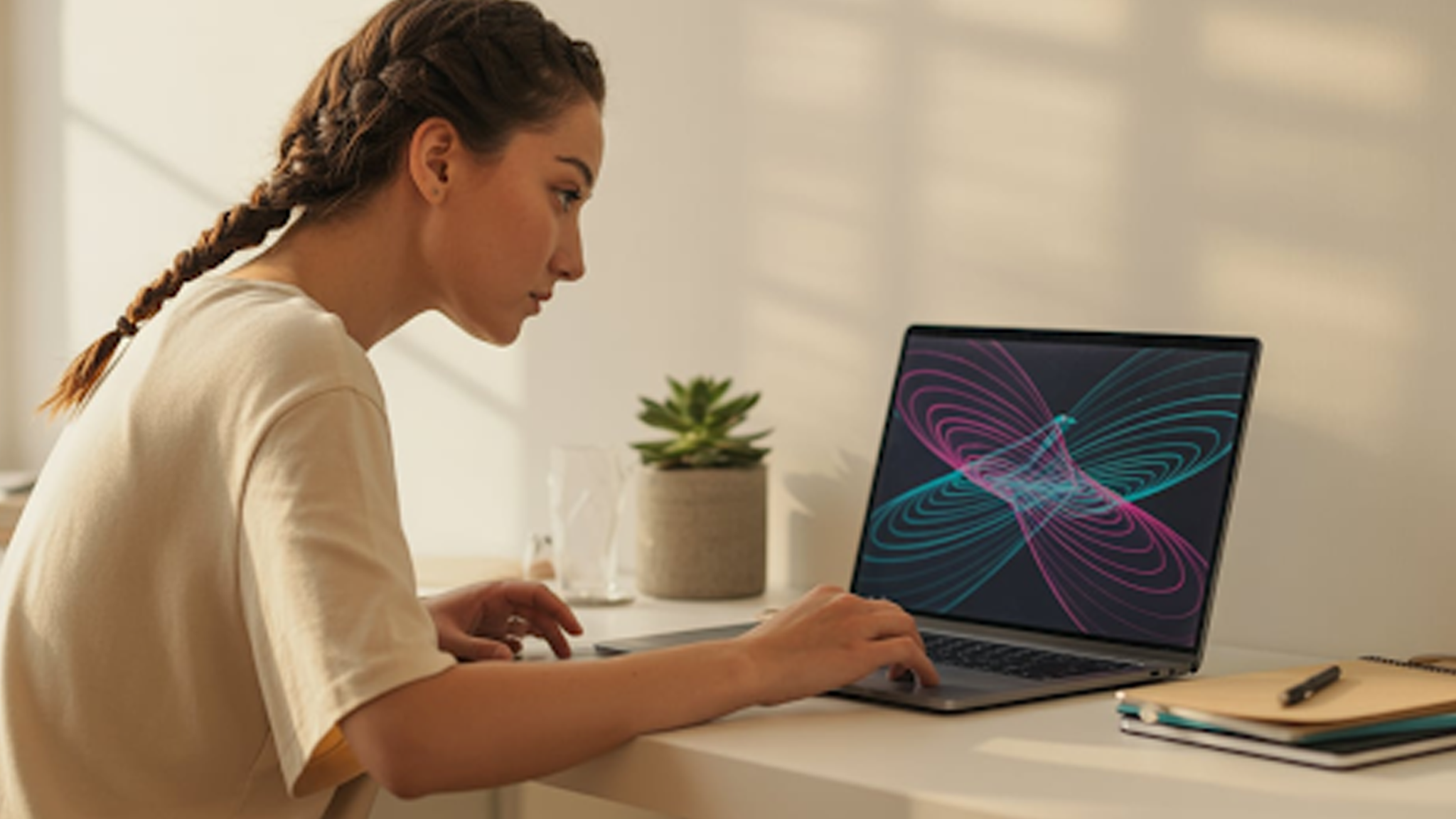
Abstract animation removes literal objects and keeps motion, tone, and rhythm. It uses shapes, gradients, and movement to communicate. The viewer responds to mood and tempo more than to plot.
This approach traces back to early experimental filmmakers who used film as a visual instrument. Today the form shows up in brand openers, scientific explainers, and motion loops on social platforms. Abstract work is efficient. It conveys mood with less detail. That efficiency makes it a practical choice for short content and large-scale UI animations.
How Can Beginners Start with Abstract Animation Today?
Start small and stay intentional. Study one motion idea per session. Practice stretches of 5 to 15 seconds. Make those loops clean.
Pick a simple goal. One example: communicate calm with slow circular motion and muted tones. Another goal: create tension with sharp shapes moving on fast beats. Build a short storyboard: three frames, three moves, one loop. Hold yourself to the smallest repeatable unit that communicates the idea.
Cross-apply lessons from other fields. Principles used in 3D medical animation for clarity work here too. The same timing and hierarchy rules that make a surgical sequence readable will make an abstract loop feel deliberate.
And if this part feels heavy or you want a professional to take your design to the finish line, we can help. At animated-videos.local/, we create 2D and 3D animations that move projects from rough idea to polished delivery. Whether you need a loop for social, a sequence for a website, or a full abstract film, we make it work cleanly and on brand.
Which Tools and Techniques Produce Convincing Motion?
You do not need expensive software. Start with one familiar tool and learn its timing controls. After Effects offers keyframe finesse and a friendly graph editor. Blender gives access to simulation, particles, and node-based shaders. p5.js or Processing will teach algorithmic motion.
Learn easing curves. Mastering slow-in and slow-out changes how motion reads. Use the graph editor every time you animate. Use noise and turbulence sparingly to add organic variation. Procedural methods let you create complex behavior with a few parameters. Those methods are central to the future of 3D animation and are worth learning early.
Stop motion has kinship with abstract animation. Techniques from Claymation teach you about frame spacing, tactile texture, and physical resonance. Those lessons translate back into digital motion, especially when you use displacement maps or frame blending.
How Do Color, Shape, and Rhythm Communicate Emotion?
Color sets the first tone. Saturated warm hues feel energetic. Muted cool hues feel calm. Use contrast, not clutter. One bright accent will anchor a sequence.
Shape matters more than most beginners expect. Rounded shapes feel friendly. Angular shards feel aggressive. Repetition of a single motif creates unity. Vary scale to create depth without literal perspective.
Rhythm controls pace. Use beats to guide attention. A slow three-beat pattern can read like breathing. A rapid syncopated pulse creates urgency. Combine rhythm with color shifts to make motion feel narratively purposeful.
Odd reference example: small curved strokes that ripple like fantasia short hairstyles can suggest human presence without a character. That trick gives scenes an implied body without adding literal figures.
Quick Practice: Simple Trippy Drawings and Loop Exercises
Exercise one: trippy 6-second loop. Draw five simple strokes. Animate scale, rotation, and opacity across 24 frames. Repeat until the loop reads seamless.
Exercise two: morphing blobs. Create two blob shapes. Use shape morph or mesh warp. Time the morph to match an audio beat. Test at 30 frames and at 60 frames to see the effect of spacing.
Exercise three: color rhythm. Choose three colors. Animate a single circle that moves between them on a 4-beat pattern. Add easing on beats two and four. Watch how a tiny change in timing alters emotional weight.
Use these short studies as daily drills. Keep one folder named “loops.” Revisit them after a week and make a better version. This practice concretely improves timing and design judgment.
Common Mistakes Beginners Make and How to Fix Them
- They add too many shapes and too many effects. Remove elements until the motion still reads. Simplicity isolates intention.
- Sound sync makes motion feel intentional. Even a light metronome during early passes will improve timing choices.
- Trend copying teaches craft but not clarity. Aim to learn a rule rather than mimic a look. That rule will be useful across assignments, including animation in business website work or social content.
- The first pass should be rough. Make three variations before you pick a direction. This habit saves time and produces stronger outcomes.
FAQ
[sp_easyaccordion id=”7601″]
Conclusion
Abstract animation is more than moving shapes. It trains you to see motion, color, and rhythm as tools for communication. Each loop, each experiment teaches you how subtle changes affect perception and emotion.
From short social clips to explainer sequences and immersive UI loops, abstract motion adds depth and engagement to your projects. If the process feels challenging, professional guidance can accelerate results. At animated-videos.local/, we transform concepts into precise, polished 2D or 3D animations, making sure your work not only looks dynamic but also communicates effectively.