
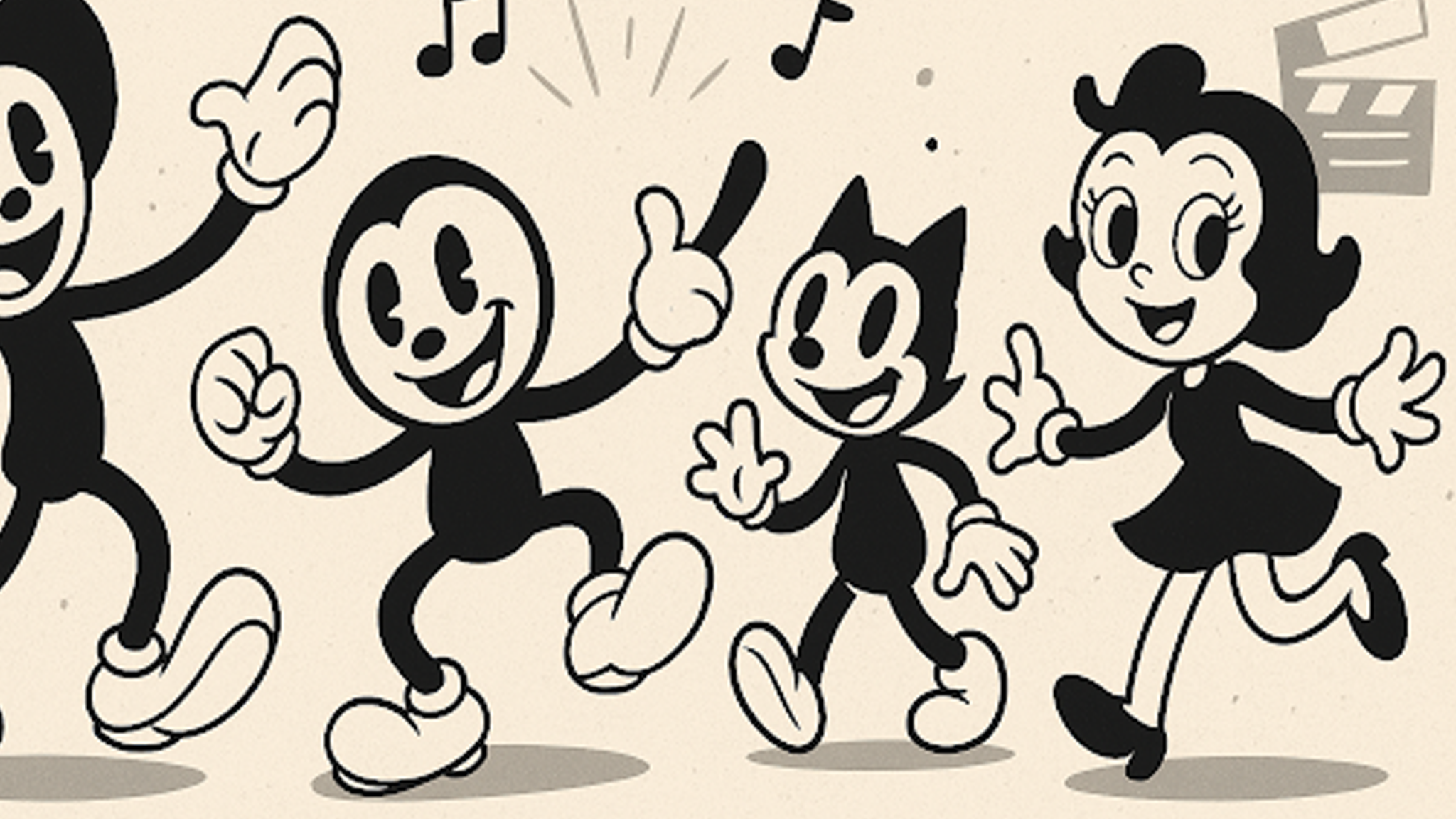
Cartoons once bounced, stretched, and twisted with movements no human could copy. Limbs curved like noodles, faces morphed in seconds, and every motion felt alive with rhythm. This exaggerated style, known as rubber hose animation, gave early cartoons their charm and energy.
It was simple, fast to draw, and instantly recognizable. Studios like Disney and Fleischer used it to bring characters such as Mickey Mouse, Betty Boop, and Felix the Cat to life. What started as a practical shortcut soon shaped the foundation of modern animation.
What Is Rubber Hose Animation?
Rubber hose animation is a vintage animation style where characters have limbs that bend and stretch like soft rubber hoses. There are no elbows or knees, only smooth, curved lines.
The name comes from this exact design choice: characters looked like they had rubber hoses for arms and legs. This style became the shorthand for early cartoons.
You can see it in 1920s and 1930s cartoons, but also in modern retro revivals. Games like Cuphead brought back the look, proving that the rubber hose animation style still has cultural pull.
History of Rubber Hose Animation
The roots of rubber hose animation stretch back to the 1920s. Disney, Fleischer Studios, and other pioneers needed a way to animate quickly and cheaply. Drawing characters with stiff joints was slow. Smooth, curvy limbs solved that problem.
It caught on instantly. Steamboat Willie (1928) made Mickey Mouse a global star with the rubber hose cartoon style. Betty Boop and Felix the Cat followed. By the 1930s, nearly every popular short used it.
By the mid-20th century, animation began chasing realism. Studios shifted to more detailed designs, and rubber hose faded from mainstream use. Yet its influence never left the art form.
Key Characteristics of Rubber Hose Animation
This style has a few unmistakable traits:
- Stretchy, jointless limbs that bend in smooth curves.
- Bouncy, rhythmic motion that makes every action playful.
- Simple character design, often round heads, big eyes, and gloved hands.
- Whimsical energy, with characters moving in surreal ways.
This old cartoon animation style gave artists freedom. Instead of trying to match physics, they leaned into exaggeration. The result was a style both efficient to produce and endlessly entertaining.
Is Rubber Hose Animation Still Used Today?
Yes, the rubber hose style is alive. Indie animators and studios use it to stand out from polished 3D blockbusters.
The game Cuphead is the most famous modern revival. Every boss fight feels like a lost 1930s cartoon. Motion graphics artists also borrow the style to create retro ad spots or playful brand animations. Short films and commercials use it when they want charm, simplicity, and a hint of nostalgia.
This is proof that rubber hose animation today is not just history. It remains a creative tool with modern relevance.
At animated-videos.local/, we have created 3D animations that turn client ideas into eye-catching visuals that explain, engage, and deliver results. We can transform projects, logos, cartoons, videos, films, or any creative concept into rubber hose style graphics that capture attention and make messages unforgettable.
How to Draw and Animate in Rubber Hose Style
Learning the rubber hose style is easier than you think. Start with simple shapes, then focus on rhythm and flow.
Drawing Rubber Hose Characters
Characters in this style use round shapes, oversized eyes, and noodle-like limbs. Classic gloves and expressive faces are common. Keep designs simple so movement feels smooth.
Creating Rubber Hose Animation in 2D
Software like Adobe Animate, Toon Boom Harmony, or After Effects makes it possible to replicate the old look. Use tweening animation for loops, arcs, and bouncing effects. Rely on squash and stretch to keep movement alive.
Rubber Hose Animation in 3D
It is possible to bring this style into 3D. Tools like Blender, Maya, or Cinema 4D let you rig characters with bendy, flexible limbs. Keeping the bounce and rhythm is vital. Techniques used in 3D rendering help preserve the bold shapes, while clever rigging avoids stiff movements.
This hybrid approach keeps the energy of vintage rubberhose art style, while taking advantage of modern 3D software.
Advantages and Limitations of Rubber Hose Animation
This animation style is beloved for its simplicity and charm. Yet it also comes with limits that shaped why studios later moved on.
| Advantages | Limitations |
| Easy to draw and animate | Movements lack realism |
| Fun, playful, and nostalgic feel | Hard to convey drama or serious tone |
| Connects quickly with audiences | Limited range for complex storytelling |
| Works well in modern retro projects | Can feel repetitive if overused |
Rubber Hose Animation vs. Modern Animation Styles
Rubber hose animation stands apart from the realism-driven approach of Disney’s Golden Age or Pixar’s 3D films. It values charm and rhythm over accuracy and detail.
| Rubber Hose Animation | Modern Animation Styles |
| Bouncy, jointless limbs | Realistic anatomy with joints and muscles |
| Focus on playful exaggeration | Focus on believable motion and arcs |
| Simple, bold character design | Detailed, textured models |
| Relies on rhythm and charm | Uses motion capture and complex rigs |
| Encourages creative animation ideas | Suited for drama and emotional depth |
FAQs
[sp_easyaccordion id=”7623″]
Conclusion
Rubber hose animation shaped the way we understand cartoons. It simplified drawing, introduced playful exaggeration, and gave birth to characters that are still famous today.
It faded as styles shifted, but it never died. From Cuphead to modern motion graphics, the rubber hose cartoon look continues to inspire.
If you want to learn rubber hose animation, start simple. Sketch characters with curves, keep movements smooth, and focus on rhythm. Experiment in both 2D and 3D. Rubber hose is not just history. It is an open invitation to keep animation playful. That is why learning it today matters.